By Analyst Team · Updated 2026-07-14 · 12 min read
Choosing the right IP-TV provider starts with knowing exactly what to look for — before you commit.
1. Why Many People Regret Their Choice of IP-TV Provider
Every week, thousands of cord-cutters sign up with an IP-TV provider only to find themselves frustrated within days. The initial excitement of accessing hundreds of channels at a fraction of cable costs quickly turns into disappointment when buffering icons appear during the final minutes of a big match or when a critical channel goes offline without warning.
The most common complaints we see across IP-TV provider reviews Reddit threads and consumer forums include unreliable service during peak hours, poor customer support that takes days to respond, and sudden account terminations with no refund. Many users also report that the promised "4K UHD" channels stream at barely 720p resolution when congestion hits.
These problems almost always trace back to a single issue: rushing into a purchase without vetting the provider properly. The streaming landscape changes rapidly, and what worked for a friend six months ago may not hold up today. Understanding the common pitfalls is the first step toward making a choice you won't later regret.
LIMITED TIME AVAILABILITY
Unlock Full IP-TV Provider Access
Unlock complete high-definition information and priority access packs. Lock in your pricing model today before plans return to standard regional metrics.
2. Criteria That Should Drive Your Decision
Server Infrastructure and Streaming Reliability
The backbone of any IP-TV service is its server network. A reliable IP-TV provider no buffering experience requires geographically distributed servers capable of handling peak traffic. Ask potential providers about their server locations — services with nodes in North America, Europe, and Asia typically deliver better performance to international audiences.
Look for providers that advertise dedicated streaming servers rather than shared hosting. A dedicated infrastructure ensures your connection isn't competing with thousands of other users for bandwidth. Some premium providers now offer load-balanced server clusters that automatically route you to the least congested node.
Channel Lineup and Content Quality
Not all channel lists are created equal. A quality IP-TV provider should offer genuine HD and 4K streams, not upscaled standard definition content. Verify that the service provides native high-definition broadcasts for the channels you care about most, especially if you are seeking an IP-TV provider for sports where picture clarity on fast-moving action matters immensely.
Check whether the provider includes regional sports networks, international news packages, or specialized content like documentaries and kids' programming. Many providers offer a trial or demo playlist so you can assess stream quality before purchasing.
Device Compatibility and User Experience
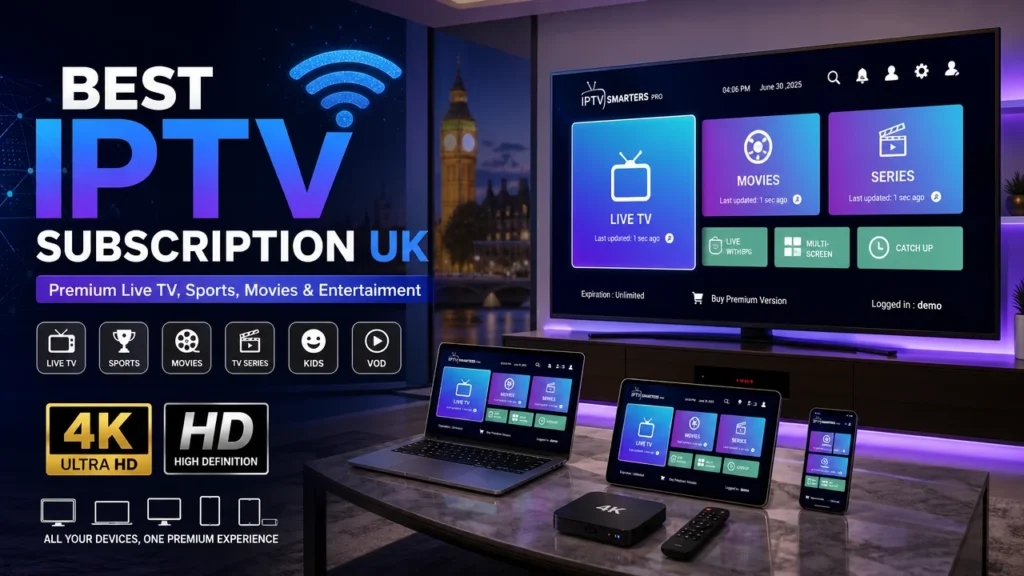
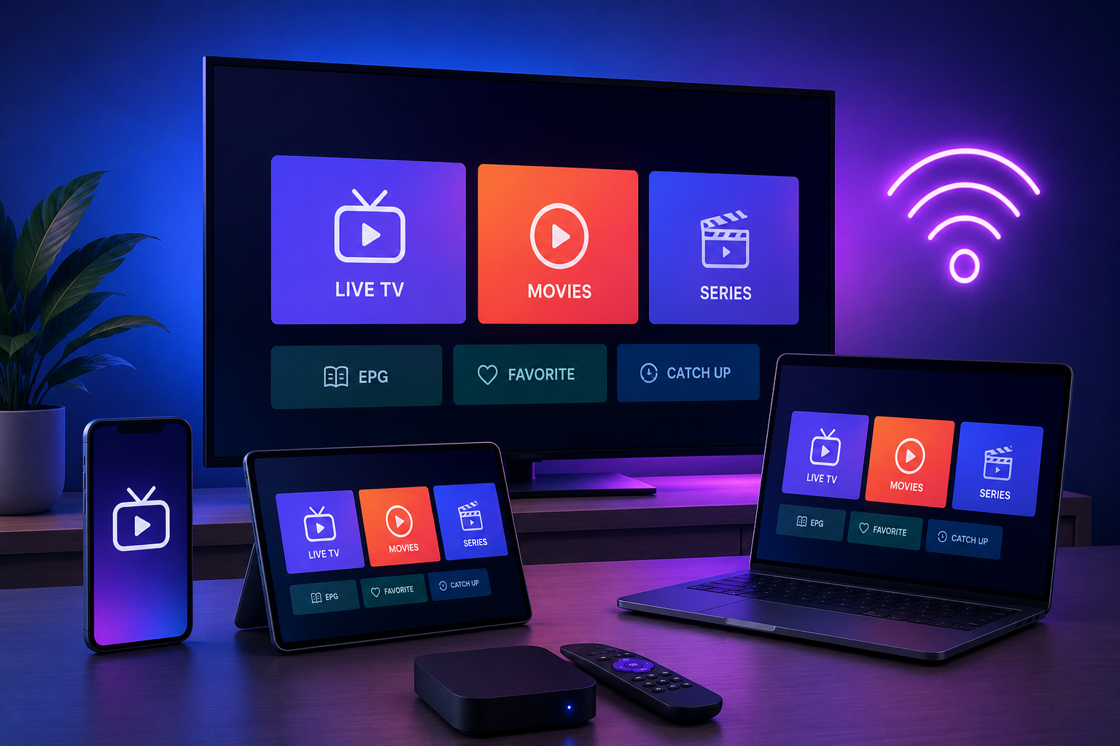
Modern households use a mix of devices — smart TVs, Android boxes, Firesticks, iPads, and smartphones. The best best IP-TV provider 2026 candidates offer native apps or easy configuration guides for all major platforms. Check whether the service supports MAG boxes, Enigma2 receivers, or streaming sticks without requiring complicated manual setup.
Electronic Program Guide (EPG) integration is another critical factor. A well-maintained EPG makes channel surfing feel like traditional cable rather than a clunky digital experience. Some providers also offer catch-up TV and video-on-demand libraries, adding significant value to your subscription.
Pricing and Subscription Flexibility
The cheapest IP-TV subscription isn't always the best value. Extremely low prices often indicate over-subscribed servers, poor content licensing, or imminent service shutdown. Look for providers that balance affordability with transparent pricing — monthly, quarterly, and annual plans that clearly state what you get at each tier.
Beware of lifetime subscriptions offered at unrealistically low rates. The streaming market is volatile, and providers offering "unlimited lifetime access" for $50 often disappear within months. A reputable IP-TV provider will be transparent about their pricing structure and offer reasonable renewal terms.
Secure special promotional rates instantly before the window closes.
Activate Your IP-TV Provider Subscription Now →3. What You Need to Know About the Current Market
The IP-TV landscape in 2026 has matured significantly from the "Wild West" days of a few years ago. Regulatory pressure has increased, particularly in European markets, forcing many providers to operate more transparently or shift their hosting offshore. This has created a two-tier market: established services with proper infrastructure and smaller, riskier operations.
One major trend is the rise of hybrid services that combine live IP-TV with streaming platform integrations. Some providers now offer Netflix or Disney+ style on-demand libraries alongside traditional live channels, blurring the line between IPTV service vs cable TV — and increasingly offering advantages over both.
Consumer awareness has also improved. Buyers are now more likely to check for features like anti-freeze technology, VPN compatibility, and multi-screen support before subscribing. The market has responded with more sophisticated offerings, including AI-driven stream optimization that adjusts quality based on your connection speed.
4. Questions to Ask Before Buying
Before you hand over any payment, arm yourself with these essential questions. A trustworthy provider will answer them clearly and without evasion.
1. Do you offer a free trial or money-back guarantee? Most reputable best IP-TV provider 2026 candidates offer at least a 24-hour trial or a 7-day refund window. If a provider offers neither, consider it a red flag.
2. What is your uptime guarantee? Professional providers will commit to at least 99.5% uptime for their primary servers. Ask for their historical uptime statistics.
3. How many simultaneous connections are allowed? Family households need to know whether they can watch on multiple devices at once without paying extra for each screen.
4. What happens if my favorite channel goes down? A responsive provider should have a channel request system and clear timelines for resolving outages.
5. Do you support external players like VLC or TiviMate? This flexibility is crucial for users who want to customize their viewing experience beyond the provider's default app.
5. Warning Signs to Spot
Knowing what to avoid is just as important as knowing what to look for. These warning signs should prompt you to walk away from any IP-TV provider.
Extremely low pricing with no explanation. If a provider offers 10,000 channels for $3 per month with no catch, the catch is likely that the service will be disconnected within weeks. Sustainable services require infrastructure investment.
No trial or demo available. Legitimate providers understand that customers want to test the water. Refusing to offer any preview of the service is a strong indicator of poor quality streams.
Payment through sketchy methods only. While cryptocurrency is common in this industry, a provider that accepts only obscure payment methods with no buyer protection should raise concerns.
Excessive downtime during high-traffic events. Search for the provider's name alongside words like "down," "buffering," or "scam" to see what real users are saying. Social media complaints during major sporting events are particularly telling.
Vague or non-existent terms of service. Every serious provider should have clear terms covering refunds, privacy, acceptable use, and service limitations. Absence of these documents suggests an operation that may not last.
6. Comparison Table of Available Options
| Feature | Budget Providers | Mid-Range Providers | Premium Providers |
|---|---|---|---|
| Monthly Price Range | $5 – $12 | $12 – $25 | $20 – $40 |
| Channel Count | 3,000 – 5,000 | 5,000 – 10,000 | 8,000 – 15,000+ |
| 4K Stream Quality | Limited / Inconsistent | Good (50-70 channels) | Excellent (200+ channels) |
| Server Reliability | Moderate – Frequent drops | Reliable – Occasional issues | Very reliable – 99%+ uptime |
| Simultaneous Connections | 1 – 2 devices | 2 – 4 devices | 4 – 5+ devices |
| Customer Support | Email only – Slow | Email + Live Chat | 24/7 Chat + Phone + Ticket |
| Trial Available | Rarely | 24-hour trial common | 24-72 hour trial |
7. Recommendation by Budget and Needs
Based on our analysis of the current market, here are targeted recommendations depending on your specific requirements.
✓ Pros
- Best for Sports Fans: Premium providers offering dedicated sports server clusters eliminate buffering during live matches.
- Best for Large Families: Mid-to-premium tiers with 4-5 simultaneous connections allow everyone to watch separately.
- Best for International Content: Look for providers with explicit country-specific packages rather than one-size-fits-all lineups.
✗ Cons
- Budget providers often fail: The cheapest options frequently overload servers during prime time, especially weekends.
- No free trials = red flag: Avoiding trials often hides poor quality or limited channel counts.
- Lifetime deals are risky: Most "lifetime" providers disappear within 12 months, leaving you with no recourse.
Our top pick for most users: Mid-range IP-TV provider subscriptions offer the best balance of channel variety, stream reliability, and affordability. Expect to spend between $15-20 per month for a service that includes 5,000+ channels in HD/4K with stable servers and responsive support. If sports are your primary focus, invest in a premium package that explicitly routes sports traffic through optimized servers.
8. How to Maximize Your Investment
Once you've chosen a reliable provider, these strategies will help you get the most value from your subscription.
Use a wired Ethernet connection for your primary streaming device whenever possible. Wi-Fi interference is one of the most common causes of buffering that users mistakenly blame on their IP-TV provider. A simple Cat6 cable connection can dramatically improve stream stability.
Invest in a quality streaming device. While many smart TVs have built-in IP-TV apps, dedicated hardware like an Nvidia Shield or Formuler Z11 often delivers superior video processing and faster channel switching. These devices handle high-bitrate 4K streams more smoothly.
Set up a VPN to protect your privacy and potentially access geo-restricted content. Some ISPs throttle IP-TV traffic, and a VPN can prevent this. Choose a VPN provider with servers near your IP-TV provider's infrastructure for minimal speed loss.
Keep your provider's app updated and regularly clear your device cache. Outdated software can cause compatibility issues that degrade performance over time. Most good providers push updates automatically, but manual checks help ensure you're running the latest version.
Final Subscription Window:
Main Offer Today →Affiliate Disclosure: Clicking this secure link verified by our network supports our team through standard partnership terms at zero extra cost to your invoice.
Frequently Asked Questions
1. How do I know if an IP-TV provider is legal in my country?
Legality varies significantly by jurisdiction. In the United States, the legality depends on whether the provider holds proper licensing for the content they distribute. European countries have stricter enforcement. Always research local laws and choose providers that clearly state their licensing status. Using a VPN does not automatically make unauthorized streaming legal.
2. What internet speed do I need for a reliable IP-TV provider experience?
For HD streaming, you need at least 15 Mbps download speed per device. For 4K content, 25-30 Mbps per device is recommended. If multiple household members will stream simultaneously, multiply accordingly. Fiber optic or cable broadband is preferred over DSL. Remember that your actual speed may be lower than your plan's advertised maximum during peak hours.
3. Can I use an IP-TV provider with my Amazon Fire Stick?
Yes, most modern IP-TV providers support Fire Stick through dedicated apps or by sideloading APK files. Popular apps like TiviMate, IPTV Smarters, and Perfect Player are compatible. Ensure your Fire Stick is at least the 4K model for smooth performance with high-bitrate streams. Older standard Fire Sticks may struggle with 4K content.
4. What is the average cost of a quality IP-TV subscription in 2026?
Quality IP-TV subscriptions in 2026 range from $12 to $25 per month for mid-tier service. Budget options under $10 often compromise on reliability. Premium services with dedicated sports servers, 4K content, and multi-device support cost $20-40 monthly. Annual plans typically offer 15-25% discount compared to monthly billing.
5. How to find legitimate IP-TV provider reviews on Reddit?
Search for provider names in subreddits like r/IPTVReviews and r/streaming. Look for review threads with multiple commenters and avoid posts from accounts that only promote one provider. Cross-reference Reddit feedback with independent review sites. Be cautious of overly positive reviews posted by new accounts, as some providers engage in astroturfing.
6. Is IPTV safer than cable TV for privacy and data security?
IP-TV services generally collect less personal information than traditional cable providers, but they also operate with fewer regulatory protections. Unauthorized providers may log viewing habits or sell data. To protect yourself, always use a reputable VPN, pay with cryptocurrency or virtual cards when possible, and choose providers with clear privacy policies.
7. What is the difference between IP-TV and streaming services like Netflix?
Netflix and similar services provide on-demand content from their licensed library, accessed through their proprietary platform. IP-TV delivers live television channels in real-time, similar to traditional cable but over the internet. Many IP-TV providers also include video-on-demand libraries, but their primary offering is live channel simulcasting with full EPG support.
8. Can I share my IP-TV subscription with family members in different homes?
This depends entirely on the provider's terms of service and technical enforcement. Some providers explicitly limit connections to a single IP address, while others allow multiple IPs. Most budget and mid-tier providers allow 2-4 simultaneous connections from different locations. Sharing with multiple households may violate terms and could result in service termination. Check before purchasing.